
Burning under the sun: Understanding this skin cancer that threatens and kills.
Melanoma is a type of skin cancer that develops from melanocytes, the cells responsible for producing melanin, the pigment that gives skin its color.
This cancer can appear on any part of the body, but it is most commonly found on areas exposed to the sun, such as the face, neck, arms, and legs. It can also develop on areas of the skin that are not exposed to the sun, such as the palms of the hands, soles of the feet, and nails.
What makes melanoma particularly dangerous is its ability to metastasize, or spread to other parts of the body, such as internal organs or other areas of the skin. When not detected early and treated promptly, melanoma can become very aggressive and life-threatening.
Melanoma accounts for approximately 1-2% of all skin cancers, but it is responsible for the majority of skin cancer-related deaths! In recent decades, the incidence of melanoma has increased significantly in many countries and has become one of the most common cancers worldwide, with approximately 350,000 new cases diagnosed each year. Men have a slightly higher risk of developing melanoma than women, although the incidence in women is increasing. This cancer can occur at any age, but approximately 75% of melanoma cases are diagnosed in people over the age of 55. Finally, despite advances in diagnosis and treatment, melanoma remains a potentially fatal cancer. Every year, around 60,000 people worldwide die from melanoma.
It is therefore important to monitor your skin regularly and consult a doctor if you notice any suspicious changes. Early diagnosis of melanoma significantly increases the chances of successful treatment, underscoring the importance of awareness and vigilance towards this potentially deadly disease.
Health AND beauty: The benefit of protecting your skin against UV rays.

UV rays: a double face that can caress or burn, depending on our exposure. On the one hand, they give our skin a golden glow and stimulate the production of vitamin D, essential for our health. But on the other side of this bright coin lie sneaky dangers. UV can damage the DNA of our skin cells and its impact is not limited to cancer; they also accelerate skin aging, causing wrinkles, sun spots and loss of elasticity. So let’s be clear: prevention is our best asset. By protecting our skin with the following tips, we can limit UV damage and keep our skin healthy and youthful. Because, after all, isn’t beauty worth protecting?


The ABCDE method

Questionnaire for those over 60

Protection of children

Coloring pages to print to educate children in a fun way








Summary questionnaire


Want to know more ? Here is the important data so that melanoma no longer has any secrets for you.

Late diagnosis and gender disparities
Epidemiological studies have revealed that men are more likely to develop melanoma than women at all ages. Additionally, melanoma in men tends to be diagnosed at a more advanced stage than in women, which can lead to increased mortality.
Several factors may contribute to these disparities. First of all, men are often less likely to undergo regular skin exams or seek medical advice when suspicious symptoms appear. This can lead to a delay in diagnosis and further progression of the disease by the time it is finally detected.
Additionally, there are biological differences between the sexes that could influence the progression and response to treatment of melanoma. For example, some studies suggest that sex hormones, such as androgens, may play a role in regulating tumor growth. Further research is needed to fully understand these biological mechanisms and their impact on melanoma-related mortality in men.
Moreover, sociocultural and behavioral factors may also contribute to the observed disparities. For example, men tend to engage in higher risk behaviors when it comes to sun exposure, such as spending more time outdoors without adequate protection from UV rays, which increases their risk of develop melanoma.
In summary, disparities in melanoma diagnosis and mortality by sex highlight the importance of educating men about the risks of this disease, promoting early detection practices, and encouraging research into biological differences. and behavioral aspects that could influence its development and evolution.
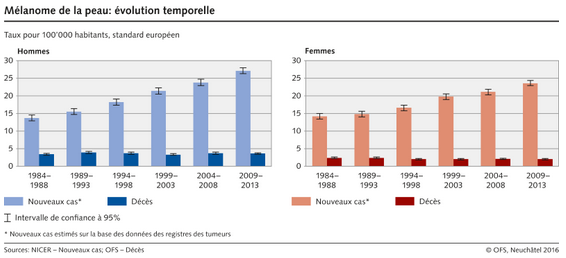
Evolution of melanoma incidence for men (left) and women (right) between 1984 and 2013
A worrying run: The incidence of melanoma in men doubled between 1984 and 2013, while in women it increased by almost 80%. These numbers mark an alarming trend and can be explained by these simple factors:
- Sun exposure: Risky behaviors, such as excessive tanning, outdoor recreational activities, and sun-exposed occupations, can increase the risk of melanoma. Men are often more inclined to engage in outdoor activities without adequate protection from UV rays, which may contribute to their higher incidence rate.
- Lifestyle Changes: Over the decades, lifestyles have evolved, with an increase in the use of outdoor recreational equipment, travel to sunny destinations, and indoor tanning practices. These changes likely contributed to increased exposure to UV rays, thereby increasing the risk of melanoma.
- Knowledge and awareness: Paradoxically, better understanding of the risks of sun exposure and risky behaviors, as well as increased awareness of the importance of skin cancer prevention, may also have led to an increase melanoma diagnoses over time.
- Hormonal factors: Biological differences between the sexes, such as hormonal fluctuations, may also play a role in melanoma predisposition. Further research is needed to fully understand these mechanisms.
All of this highlights the importance of increased vigilance and rigorous sun protection practices for everyone.